Find the Balance · Paradox 10
Help, and let people struggle
The more you rescue, the less people grow.
Part of Find the Balance, a series on the tensions every leader lives with: why we lean one way, what drives the lean, and one small move.
“My door is always open” is one of the most generous things a leader can say, and most people who say it mean it. But an open door has a habit of becoming the place where problems go to be solved by someone else. The same people come back with the same kinds of problems, the leader gets busier, and both sides start to wonder why nothing much changes. The help is real; it just isn’t always the kind that makes people stronger.
The paradox
Help people, and let them struggle. Support is the thing most of us want more of from our leaders. People who feel backed are more willing to take risks, raise problems early and bring more of themselves to the work. But some struggle is the work. It’s how people build the judgement and confidence they’ll need next time, and when a leader takes it away, however kindly, they take the learning with it.
Too little, too much
On one side is Supporting: helping, developing and caring how people are going. Done too much, it becomes rescuing. Someone brings you a problem and you solve it. Someone is stuck on a task and you take it back. Someone faces a hard conversation and you have it for them. It comes from a good place: you care, and it’s quicker. Done too little, Supporting becomes detached: focused on the work and the next deadline, not unkind, just not looking.
On the other side is Challenging: stretching people, holding a standard and letting them find their own way through. Done too little, which is where rescuing usually ends up, people are never quite asked to grow. Done too much, it becomes leaving people to sink and calling it development.
What each side invites
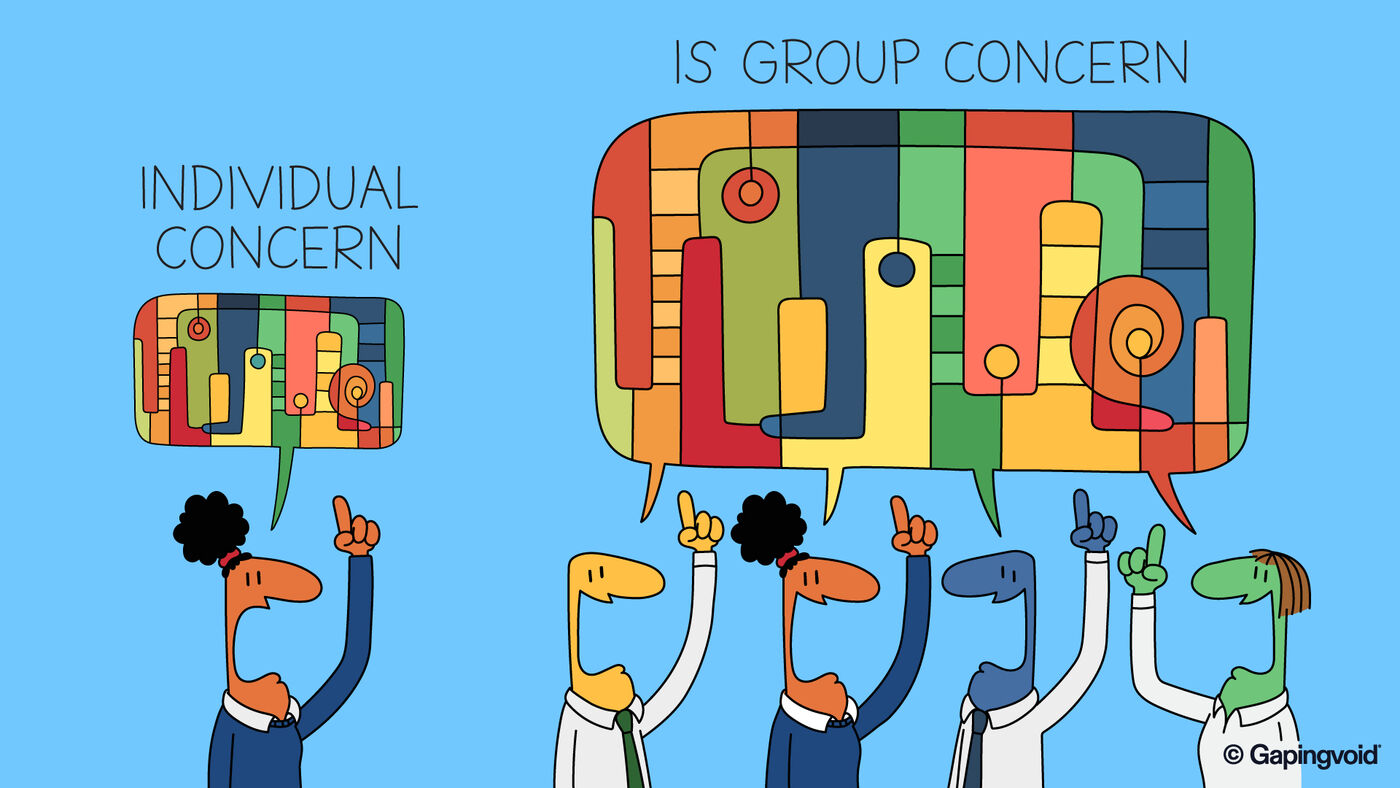
Every rescue sends a quiet message: I don’t think you can do this. People hear it, even when it isn’t meant, and they respond by bringing you more, because you’ve taught them that’s where problems go. Over time the leader’s capacity becomes the team’s ceiling, and the rescuer pays too, overloaded, a little resentful and wondering why nobody else steps up. Detachment invites a different response. People keep their struggles to themselves and stop mentioning what’s going on, until it’s big enough to become everyone’s problem. A team pays for every person whose difficulty goes unseen, which is why individual concern is always group concern.
Within: why you lean
The belief behind rescuing is often that being needed makes me valuable. If people come to you, you matter, and if they stop coming, part of your worth goes with them. It can also be a belief that letting someone struggle when you could help is a failure of care. The belief behind detachment usually runs the other way: people should manage on their own, or it isn’t my place to ask. Each is a first story about what happens if you move, and it’s rarely tested. The rescuer seldom stays out long enough to see what the person would have worked out, and the detached leader seldom asks often enough to hear what’s really going on.
Around: what the space rewards
Rescuing thrives in overloaded workplaces. When everyone is stretched and there’s no time to coach, fixing it yourself feels like the only responsible option, because a conversation about how someone might approach the problem takes longer than solving it. Where failure is punished, letting someone struggle starts to look like letting them fall. In that kind of space, rescuing is less a personal habit than a sensible response to low Safety and thin capacity. Growth needs more than encouragement. David Yeager and Carol Dweck’s review of the growth mindset debates makes the point that beliefs about being able to improve tend to matter more when the setting around people supports them. Telling someone they can grow does little if the conditions punish every attempt that doesn’t come off.
They move
The leaders who handle this well stay close enough to notice and hold back enough to let people grow. They ask what the person thinks before offering what they think. They let someone stay with a problem a little longer when the struggle is where the learning is. And they step in fully, without hesitation, when someone genuinely needs it. The question they’re answering isn’t whether to help. It’s what kind of help will leave this person more capable next time, and the answer changes from person to person.
The move
Try a little more of the opposite, as one small step. If you lean towards rescuing, the next time someone brings you a problem, ask two questions before you offer anything: “What have you tried?” and “What would you do next?” Then agree a time to check back, and leave the problem with them. If you lean towards detachment, pick the person on your team you’ve heard least from lately and give them fifteen minutes this week with no agenda except what’s getting in their way.
And a question to sit with. What did you solve this week that someone else could have solved, with a little support? And who on your team is struggling right now, and how would you know? If you asked them whether you help too much or too little, what would they say?
Find the Balance is one of Square Peg’s three practices, alongside Change the Story and Shape the Conditions.
References
- Yeager, D. S., & Dweck, C. S. (2020). What can be learned from growth mindset controversies? American Psychologist, 75(9), 1269–1284. https://doi.org/10.1037/amp0000794
Want to talk about this with your team? Square Peg works with leaders on the conditions, beliefs and behaviour behind how they lead.
Get in touch