Find the Balance · Paradox 11
Confident, and humble
The more certain you are, the less you learn, and the more you search, the less you decide.
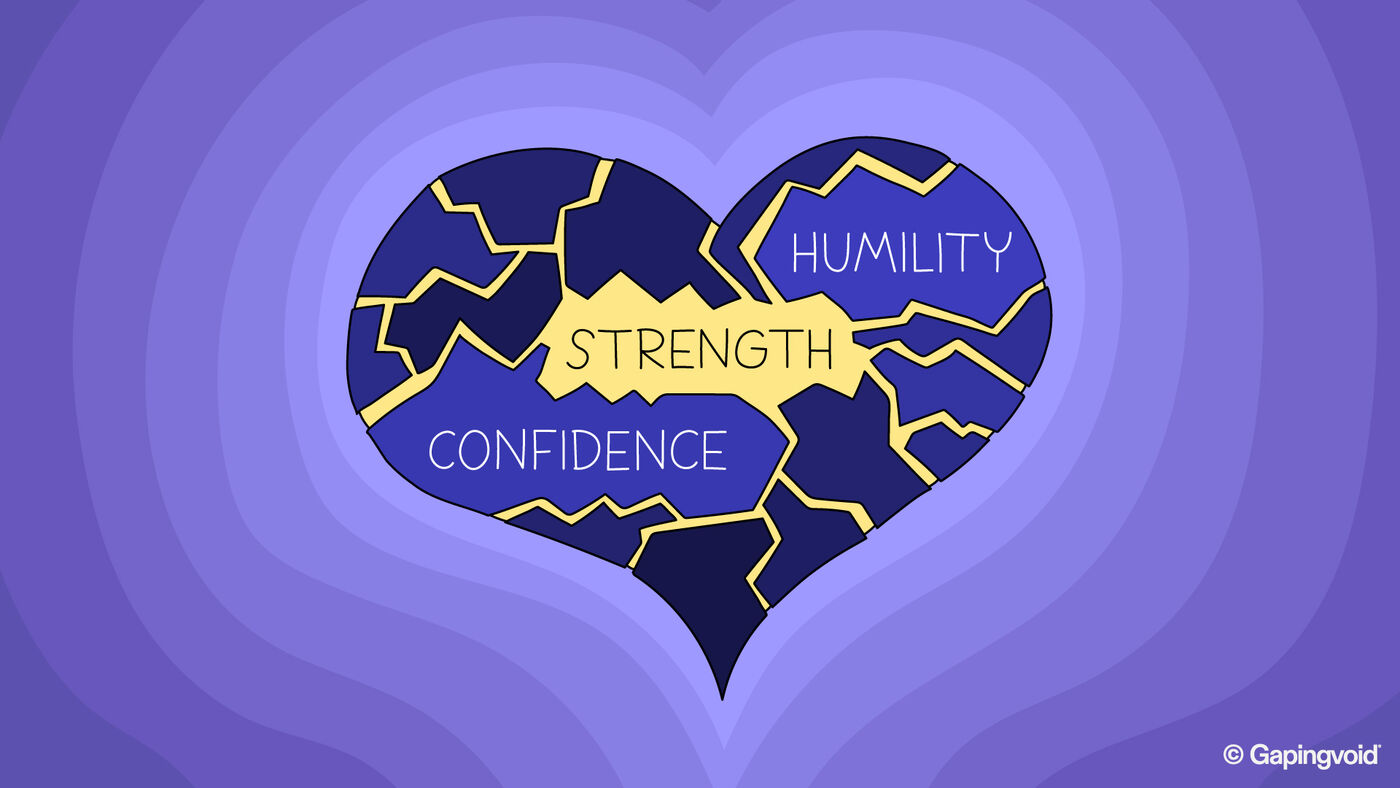
Part of Find the Balance, a series on the tensions every leader lives with: why we lean one way, what drives the lean, and one small move.
“Strong opinions, loosely held” has become a favourite piece of leadership advice, and it’s half right. The trouble is that the people around you can hear the strong opinion very clearly, while the loose hold is mostly in your head. Unless you show it, they’ll assume it isn’t there. And the reverse is just as common: leaders so committed to staying open that nobody can tell what they actually think, or when they’ll decide.
The paradox
Be confident, and be humble. The last paradox in this series is different from the others. It isn’t one more pair of approaches. It’s Inquiry, which sits at the centre of all of them: staying open to what you might be missing, testing your own assumptions and not just other people’s, and changing your mind when the evidence says you should. Every approach in this series can be used with Inquiry or without it. Directing with Inquiry sets a course and checks it, while Directing without it simply insists. Confidence without humility stops learning. Humility without confidence stops deciding.
Too little, too much
Done too little, Inquiry becomes closed. Confidence itself isn’t the problem, because backing your judgement and committing to a direction is what leadership asks of you. The problem is when confidence hardens into certainty. The closed leader hasn’t stopped listening out of rudeness. They’ve quietly decided they already know, so meetings become a performance, feedback becomes noise and challenge starts to feel like disloyalty.
Done too much, Inquiry becomes never landing. One more opinion, one more round of analysis, one more conversation, and the decision keeps moving just out of reach. It’s usually defended as rigour or humility, and it often comes with a lot of thought and not much energy. Thought without energy circles; energy without thought charges. A team needs both, and it needs to know which one the moment calls for.
What each side invites
Closed invites silence. People stop bringing their thinking to someone who has already made up their mind, and that learned quietness is one of the most reliable signs that certainty has taken over. The irony is that the closed leader then has less information, which makes their certainty less justified, not more. Never landing invites frustration and then drift. People stop investing in decisions that keep changing, start making their own, and the real decision gets made by default, often by whoever was prepared to just get on with it.
Within: why you lean
The belief behind closing down is often “I should already know.” If you’re the leader, not having the answer can feel like a failure of the role, so you reach for certainty earlier than the evidence allows. The belief behind never landing is “I can’t decide until I’m sure.” It sounds responsible, and it hides a fear of being wrong that the next piece of analysis will never quite settle. Both are first stories about what will happen if you move, and both are rarely tested. The certain leader seldom finds out how much better the decision would have been with one more voice in it. The searching leader seldom finds out how little the extra time actually changed.
Around: what the space rewards
Most workplaces expect leaders to have the answers. Confidence gets read as competence, and “I don’t know yet” gets read as weakness, so closing down is rewarded long before its costs show up. In places where mistakes are punished, the opposite pressure appears, and endless searching becomes a way of making sure nobody can say you rushed. Wendy Smith and Marianne Lewis describe working with competing demands like these over time, rather than settling them once and for all. That fits here. Confidence and humility aren’t a setting you choose. They’re a rhythm you keep.
They move
The leaders who handle this well hold a view and stay curious about it. They say “here’s what I think” and then “what am I missing?”, and they mean both. They decide when they’ll decide, gather what they can by then, and make the call. Then they keep watching, ready to change course if the evidence changes. This is also what makes every other paradox in the series possible. Noticing which way you lean takes Inquiry, which is why it’s the hardest approach to see in yourself.
The move
Try a little more of the opposite, as one small step. If you lean towards certainty, the next time you share a view that matters, follow it straight away with “What would change my mind on this?” and put the question to the person you most expect to disagree. If you lean towards searching, set yourself a simple if–then plan for one open decision: “If nothing has changed my view by Thursday at noon, then I’ll decide and tell the team.” Peter Gollwitzer’s research on plans like this suggests they make follow-through noticeably more likely.
And a question to sit with. When did someone last change your mind, and what did it take? What decision are you holding that you could make this week? If you asked the people around you whether you’re open to being wrong, how quickly would they answer?
Find the Balance is one of Square Peg’s three practices, alongside Change the Story and Shape the Conditions.
References
- Gollwitzer, P. M. (1999). Implementation intentions: Strong effects of simple plans. American Psychologist, 54(7), 493–503. https://doi.org/10.1037/0003-066X.54.7.493
- Smith, W. K., & Lewis, M. W. (2011). Toward a theory of paradox: A dynamic equilibrium model of organizing. Academy of Management Review, 36(2), 381–403. https://doi.org/10.5465/amr.2009.0223
Want to talk about this with your team? Square Peg works with leaders on the conditions, beliefs and behaviour behind how they lead.
Get in touch