Find the Balance · Paradox 4
Your patch, and the whole
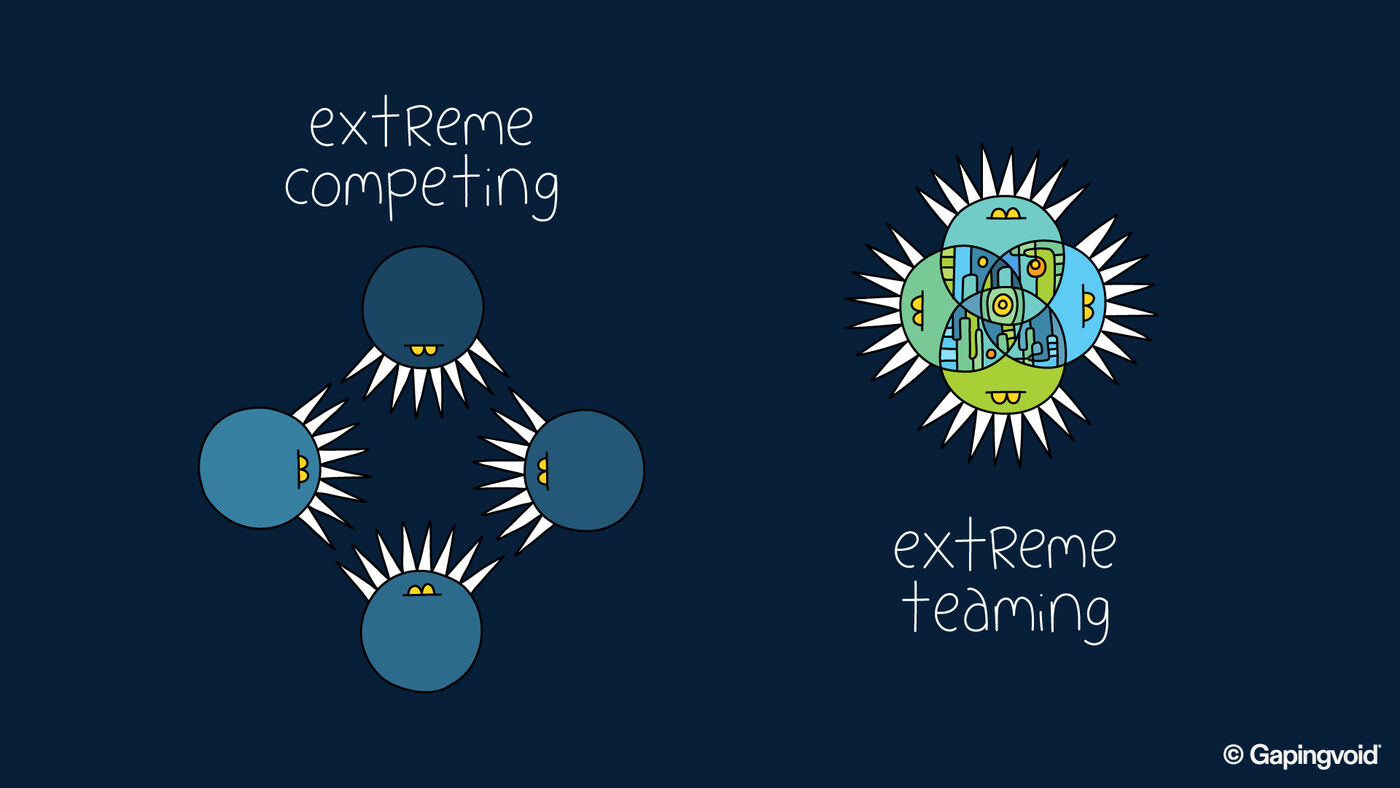
The harder you push for your win, the less others help you win.
Part of Find the Balance, a series on the tensions every leader lives with: why we lean one way, what drives the lean, and one small move.
Most organisations hire for ambition and then seem surprised when ambitious people compete with each other. We set individual targets, rank people against their peers and celebrate the leader whose numbers came in strongest, and then we run a workshop on collaboration. It’s less hypocrisy than an unnamed tension. But there’s a pattern most of us have watched play out: the harder you push for your win, the less others help you win.
The paradox
Look after your patch, and look after the whole. Leaders need to care about their own results, back their own ideas and go into bat for their team. That drive is what refuses to settle for second best. They also need to care whether the wider organisation succeeds, because no area wins for long while the whole is losing. These aren’t two loyalties fighting over the same time and attention. Over time, each makes the other possible.
Too little, too much
On one side is Striving: pursuing results, putting your ideas forward and wanting to do well. Done too much, it becomes self-serving. Credit gets taken rather than shared, information that would help a peer stays where it is, and another team’s success starts to feel like a threat. Done too little, it leaves you overlooked. The capable person never puts their name to an idea, waits to be noticed and doesn’t fight for resources because it feels like self-promotion. The result isn’t a humble reputation; it’s barely a reputation at all.
On the other side is Trusting: relying on others, sharing what you have and backing the people around you to come through. Done too little, it looks guarded, with every exchange weighed for what it might cost you. Done too much, you assume your contribution will be seen without being shown, and that your team’s needs will be met without being argued for. Often they aren’t.
What each side invites
Self-serving behaviour often works in the short term, which is why it lasts. The numbers rise and the leader looks effective by whatever is being measured. But people notice, and those who feel used tend to give what’s required and keep the rest. Peers stop offering the help that every leader eventually needs, and some start competing back.
Being overlooked invites more of the same. If you don’t put yourself forward, people stop expecting you to and stop looking your way when opportunities come up. The people who report to you learn that you won’t fight for them either.
Within: why you lean
Beneath a strong lean towards Striving there’s often a first story like “My worth is my results.” It makes sense that someone would come to believe that, especially if it has been rewarded for years. But it turns every shared win into a lost one and every peer into a rival.
Beneath a lean the other way there’s often “Putting myself forward is wrong,” a belief many of us learned early and one our tall poppy instincts here in Aotearoa can quietly reinforce. It feels like modesty, yet it leaves your ideas to be credited to whoever said them loudest. Both stories feel like character. Mostly they’re habits that have never been tested.
Around: what the space rewards
Individual targets, forced rankings and bonuses tied only to your own area all tell people that the whole is somebody else’s job. Internal competition for budget or headcount does the same. In that kind of space, sharing is a cost and holding back is simply prudent. Meaning gets shaped too. If the only story an organisation tells is about who came out on top, putting yourself forward feels like the only way to matter, and those who won’t do it fade from view. A leader trying to hold this paradox in a system built to reward one side is swimming against a fairly strong current.
They move
Barry Johnson’s work on polarities describes pairs like this as interdependent. You can’t solve them by choosing one side; you manage them over time, knowing that leaning too hard on either one eventually brings out its downsides. That’s a useful lens here. The leaders who get this right argue hard for their idea, and then celebrate when someone else’s idea wins. They fight for their team’s resources, and share them when another team’s need is greater. They’ve worked out that inside an organisation, one of the most reliable ways to get what you want is to invest in what others need.
The move
Choose one small step in the less familiar direction. If you lean towards Striving, find one thing this week that would help a peer succeed, such as some information, an introduction or an hour of someone’s time, and offer it without being asked or keeping score. If you lean towards Trusting, put your name to one idea out loud, in the meeting rather than afterwards, and say plainly what your team needs to deliver it. Notice how it feels, and how people respond.
And a question to sit with. When a peer succeeds, what’s your first reaction? When did you last put your name to something, out loud? And if you asked your colleagues whether you play for yourself or for the whole, what would they say?
Find the Balance is one of Square Peg’s three practices, alongside Change the Story and Shape the Conditions.
References
- Johnson, B. (1992). Polarity management: Identifying and managing unsolvable problems. HRD Press.
Want to talk about this with your team? Square Peg works with leaders on the conditions, beliefs and behaviour behind how they lead.
Get in touch